Reviewing Musical Heart: An Elegant Handwritten Font
I was staring at a blank brand board for a local artisanal soap studio when the usual sans serif options suddenly felt too sterile. The client wanted something that whispered "handmade" without shouting it, a visual identity that felt like a warm hug rather than a corporate handshake. That is when I pulled up Musical Heart. As someone who has tested countless typefaces in real-world branding projects, I knew exactly what to look for: versatility, character, and that elusive balance between legibility and artistry.
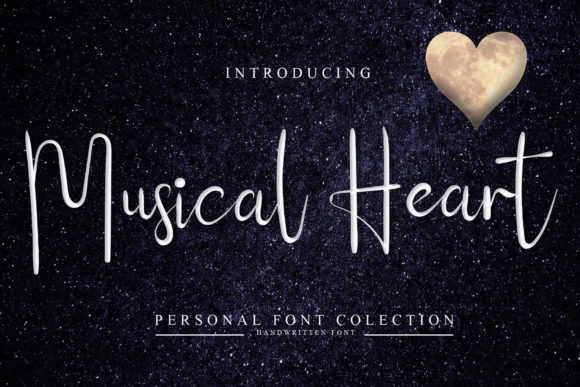
The moment I typed the studio's name into the mockup, the atmosphere of the design shifted. Musical Heart is not just another script font; it is a unique and elegant handwritten typeface that carries a distinct personality. It feels organic, as if written with a fine nib pen by a skilled calligrapher who takes their time. In the context of this boutique project, it immediately elevated the concept from a simple logo draft to a cohesive brand story.
First Impressions on the Brand Board
When evaluating a new premium font, the first test is always the logo concept. For this soap brand, I needed a display font that could stand alone as the primary mark. Musical Heart delivered with grace. The strokes vary naturally in thickness, mimicking the pressure changes of a real hand. This isn't a rigid, digitized curve; it breathes. On the brand board, paired with soft pastel swatches and texture overlays, the font looked less like a digital asset and more like an integral part of the product itself.
What struck me most was its mood. Unlike some script fonts that lean heavily into the decorative or overly romantic, Musical Heart maintains a sense of modern typography. It is sophisticated enough for high-end packaging but approachable enough for a small business owner selling goods at a farmer's market. The curves are fluid, yet the letterforms remain distinct, avoiding the common pitfall of scripts where letters blur together into illegible knots.
Testing Real-World Applications
A font review is incomplete without seeing how the typeface holds up across different mediums. After finalizing the logo, I moved Musical Heart onto various design assets to see if it maintained its integrity.
- Packaging Design: I applied the font to a label mockup for a bar of lavender soap. At a smaller size, the elegance remained intact. The details didn't get lost, which is crucial for product labels where space is limited. It communicated quality instantly.
- Business Cards: For the stationery suite, I used the font for the contact name and kept the body text in a clean sans serif. The contrast created a beautiful visual hierarchy. The card felt personal, almost like a handwritten note left on a desk.
- Social Media Graphics: Testing an Instagram post layout, I placed a short quote over a photo of the soaps. The font popped against the background image, drawing the eye immediately. It worked perfectly as a headline font for captions and promotional graphics.
- Wedding Invitations and Greeting Cards: Given the description of the font, I also tested it on a sample wedding invitation. It shined here, offering that classic, romantic feel required for such occasions. It handled long phrases gracefully, though I found it best suited for shorter, impactful messages.
In every scenario, Musical Heart acted as a strong accent font. It didn't try to do everything at once; instead, it provided the emotional hook that anchored the entire visual identity.
Understanding Limitations and Best Uses
While Musical Heart is a versatile creative font, it is important to know where it does not belong. As a handwritten style, it is not designed for long-form body text. Attempting to use it for paragraphs on a website or dense editorial content would result in poor readability and visual fatigue. The intricate loops and varying stroke widths demand white space and careful kerning.
This is strictly a display font or a headline font. It excels in logo design, short taglines, packaging headers, and event signage. If you are working on a formal corporate report or a technical manual, this is not the tool for the job. Its strength lies in evoking emotion and personality, not in conveying dense information efficiently.
For web design, I recommend using it sparingly—perhaps only for the main hero section header or navigation accents. Ensure you check the webfont availability if you plan to embed it directly into a site, as screen rendering can sometimes soften the delicate edges of a handwritten script.
Strategic Font Pairing
The true magic of Musical Heart emerges when you pair it correctly. Because it is so expressive, it needs a partner that provides structure. My go-to strategy for this typeface involves pairing it with a neutral sans serif font or a clean serif font.
For the soap brand project, I paired it with a geometric sans serif. The sharp, straight lines of the secondary font balanced the flowing curves of Musical Heart, creating a modern and professional look. Alternatively, a traditional serif font could enhance the vintage or classic vibe, making it perfect for wedding invitations or heritage brands.
When experimenting with font pairing, avoid other heavy script fonts. Two handwritten styles competing for attention usually create visual chaos. Let Musical Heart be the star, and let a simpler typeface handle the supporting roles. This approach ensures your brand identity remains consistent and readable across all platforms.
Practical Considerations for Designers
Before committing to Musical Heart for any client work, there are a few practical steps to take. First, download the full package and inspect the included styles. Check for alternates, ligatures, and swashes. These features can significantly change the rhythm of the wordmark. Sometimes, a specific swash on the capital "M" or "S" can turn a standard logo into a custom piece of art.
Second, verify the file formats. Ensure you have access to both OpenType (OTF) and TrueType (TTF) versions for desktop applications, and Web Open Font Format (WOFF/WOFF2) for digital projects. Multilingual support is also worth checking if your audience extends beyond English speakers.
Finally, and perhaps most critically, review the commercial font licensing. Whether you are designing a logo, creating packaging for print-on-demand products, or building a website, you must ensure the license covers your intended use. Many designers overlook this until it is too late. If you are using Musical Heart for a client's brand identity, merchandise, or templates, confirm that the license allows for unlimited commercial use. This protects both you and your client from legal complications down the road.
In my experience, finding a font that balances elegance with usability is rare. Musical Heart manages to strike that chord. It brings a human touch to digital designs, making brands feel more authentic and connected. Whether you are crafting a wedding invitation, refreshing a café's visual identity, or launching a new skincare line, this typeface offers a sophisticated solution that stands out in the crowded world of Fonts and Script Amp categories.